Ad Server vs DSP: Core Differences, Overlaps, and When to Use Each

“Ad server vs DSP” and “DSP vs ad server” looks like a simple comparison until you’re the one trying to explain the stack to a stakeholder, reconcile reporting across platforms, or figure out why a campaign hit budget but didn’t deliver the placements you promised. That confusion is common because both tools touch delivery, tracking, and optimization — but they exist for different reasons and solve different problems.
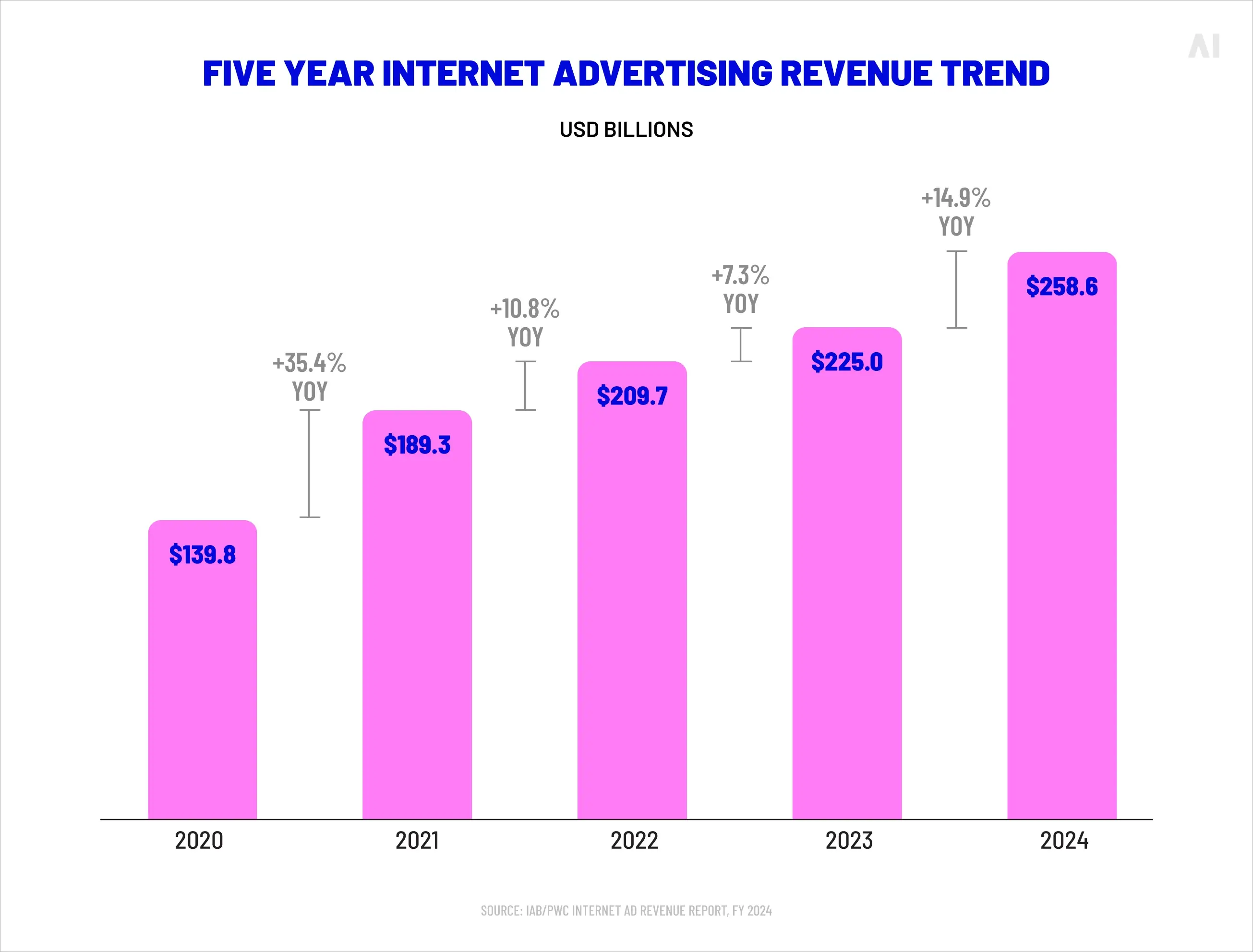
One way to ground the conversation is to remember what’s actually at stake. In the U.S., digital advertising is a massive, still-growing machine, and the plumbing decisions matter. IAB/PwC’s full-year report published in April 2025 put U.S. internet ad revenues at $258.6B for 2024, up 14.9% year over year.
This article explains what each platform does, how they overlap (without pretending they’re interchangeable), and how to choose based on your business model, channels, and operating reality.
💡 If you want a broader view of how the pieces of ad tech fit together, AI Digital’s adtech overview is a useful companion read.
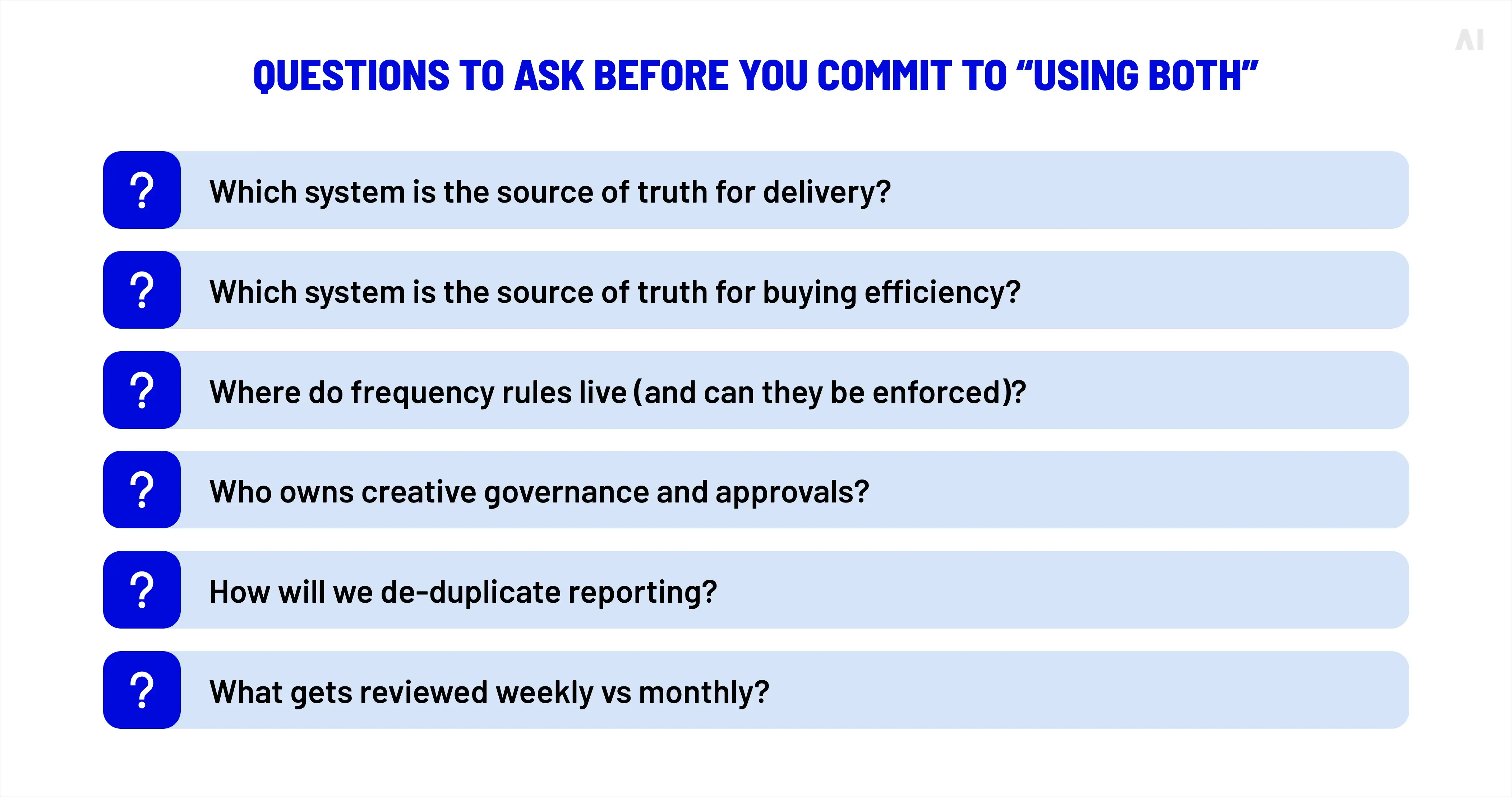
⚡ When teams treat ad server and DSP as interchangeable, they usually end up with two “truths” and one argument. Decide early which system owns delivery truth and which system owns buying truth.
What is an ad server?
An ad server is the system that decides which ad to show, where to show it, and how to track what happened, typically within a specific owned or controlled environment (a publisher site, app, CTV service, or ad network’s inventory).
The most important thing to understand is this: an ad server is primarily a delivery and control layer. It’s built to enforce rules, prioritize campaigns, manage creatives, and produce a reliable record of what was served.
At a practical level, ad servers help teams manage:
- Creative hosting and trafficking (versions, sizes, approvals, flight dates)
- Targeting rules (geo, device, audience segments, contextual constraints)
- Pacing and frequency (how delivery spreads across time and users)
- Prioritization (guaranteed sponsorships vs standard line items vs remnant)
- Measurement and logs (impressions, clicks, quartiles for video, etc.)
- Compliance and policy constraints (where certain creatives can or cannot run)
💡 If you’re aligning your stack choices to the wider ecosystem of programmatic platforms, it helps to see where ad servers sit relative to DSPs, SSPs, exchanges, and networks. This overview of programmatic platform types provides that map.
How an ad server works
An ad server looks “simple” from the outside—an ad appears on a screen—but the mechanics are rule-driven and time-sensitive. Here’s the high-level flow, with the least amount of jargon needed to be accurate.
First, an ad opportunity is created. That might be a slot on a webpage, a placement in an app, or an ad break in streaming content. When a user hits that slot (or the ad break starts), the environment makes an ad request.
Next, the ad server evaluates eligible campaigns. Eligibility usually depends on a mix of:
- Time and flighting (is this line item active right now?)
- Targeting match (does the request meet audience/device/geo/context rules?)
- Delivery constraints (caps, frequency, pacing, budget limits)
- Business priority (guaranteed commitments and sponsorships often trump everything)
Then it selects an ad and responds with the creative (or the instructions to retrieve it), along with tracking elements that record what was served and how it performed.
{{26-Ad-Server-vs-DSP-Whats-the-Difference-1="/tables"}}
To make this concrete, imagine a publisher that sold a premium homepage takeover (guaranteed) to an auto brand for a two-week window. The ad server will typically prioritize that guaranteed deal, pace it so it doesn’t blow through delivery in three days, enforce frequency caps, and ensure the creative served matches the right device sizes. If the premium deal is already fulfilled at a given moment, the ad server may route the impression to a different campaign tier or into programmatic demand.
⚡ That “prioritization logic” is one of the places where ad servers earn their keep. It’s not about bidding. It’s about honoring commitments and controlling outcomes.
Who relies on ad servers (and why)
Ad servers appear in more places than most people realize, because “delivery control” is a universal need.
- Publishers and broadcasters rely on ad servers to manage a mix of direct-sold campaigns, sponsorships, and programmatic fill. They need predictable delivery and clear records for billing, makegoods, and advertiser reporting.
- Ad networks and sales houses use ad servers to unify demand sources, enforce brand and policy rules, and manage creative at scale across many sites or apps.
- Brands (in certain setups) use ad servers when they need tight control over sequencing and exposure logic, such as frequency governance across direct buys, creative rotation rules, or complex flighting. This is more common when brands run significant direct deals or have an in-house ad ops function.
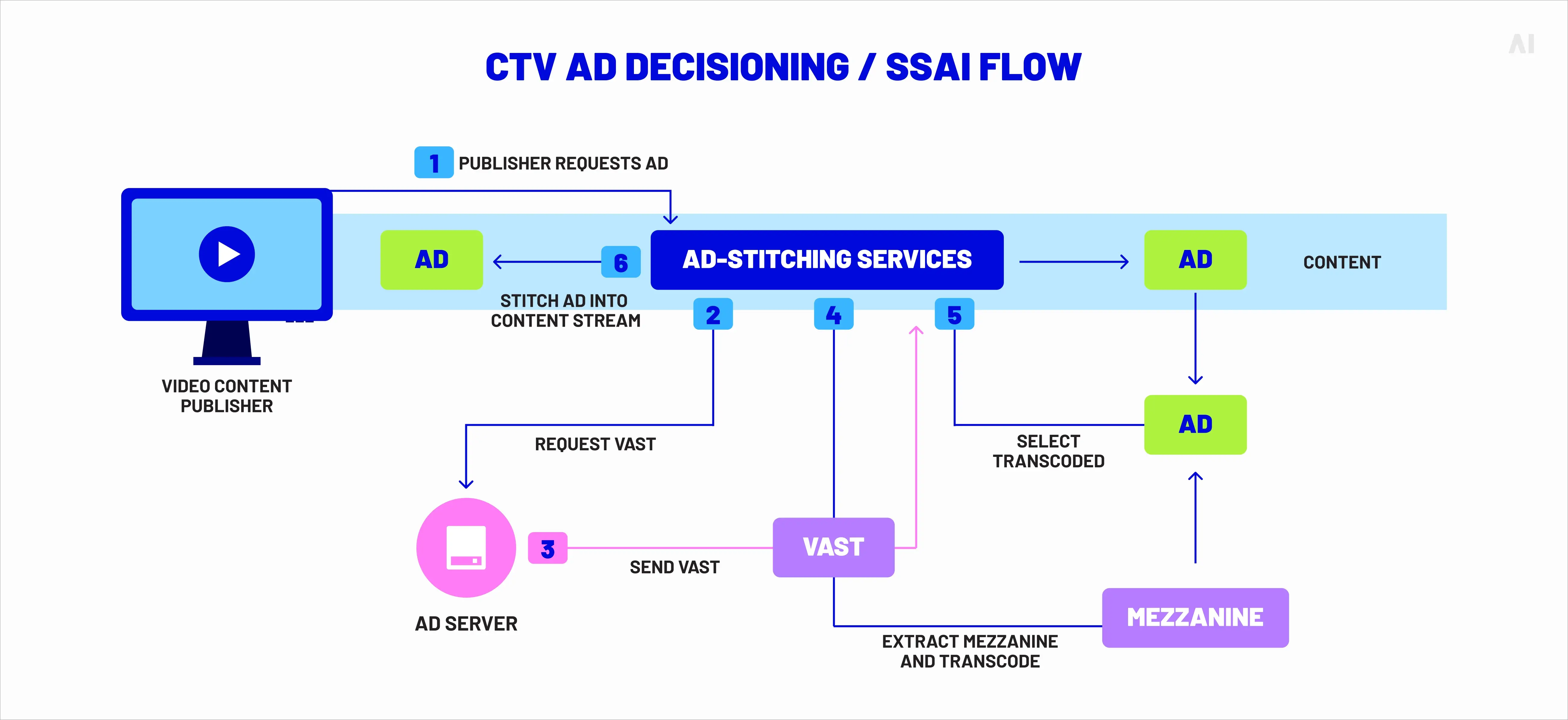
CTV and streaming environments also rely heavily on ad serving and ad decisioning because the experience is less forgiving. Viewers don’t tolerate broken ad breaks, and publishers need deterministic control over pod structure, competitive separation, and delivery guarantees. (We’ll come back to this in the “When to use an ad server” section.)
What is a DSP (Demand-Side Platform)?
A DSP is a platform used by advertisers and agencies to buy ad impressions across many publishers and supply sources, usually through programmatic auctions and deal pipes, with the goal of reaching the right audience at the right price and improving performance over time.
Where an ad server is about delivery control, a DSP is about scalable decisioning under uncertainty. Every bid request is a question: “Is this impression worth buying, and if so, how much should we bid given our goal and constraints?”
💡 If you want a dedicated DSP primer (definitions, core capabilities, and why it matters), AI Digital’s DSP overview lays it out clearly.
How DSPs optimize programmatic ads
Optimization is where DSPs feel “smart,” but it’s not magic. It’s a loop.
A typical DSP optimization loop includes:
- Ingesting supply signals. Every impression opportunity arrives with metadata: app or site context, device type, location signals (where permitted), content signals (especially important post-cookie), and sometimes household-level or cohort-level identifiers.
- Applying your rules and constraints. Budgets, frequency caps, brand safety requirements, viewability/attention goals, audience inclusion/exclusion, pacing targets, and conversion definitions.
- Bidding and selecting creative. The DSP decides whether to bid and at what price. It also chooses the creative variant, often based on what it has learned about performance by audience, context, or placement type.
- Learning from outcomes. Impressions, clicks, video completion, viewability, onsite actions, conversions, and (in some cases) modeled outcomes feed back into the system. The DSP adjusts bids, reallocates budget, and refines targeting.
💡 This is also where “programmatic advertising” as a method matters more than any single vendor. If you want the plain-language mechanics, AI Digital’s programmatic overview is a good baseline.
⚡Here’s the key nuance: DSP optimization is only as good as (a) your inputs and (b) your measurement truth. If your conversion signals are delayed, noisy, or misattributed, the DSP can optimize confidently in the wrong direction.
How the DSP ecosystem works
DSPs don’t operate in isolation. They sit inside a broader marketplace where supply is packaged, auctioned, and constrained by different rules depending on the channel.
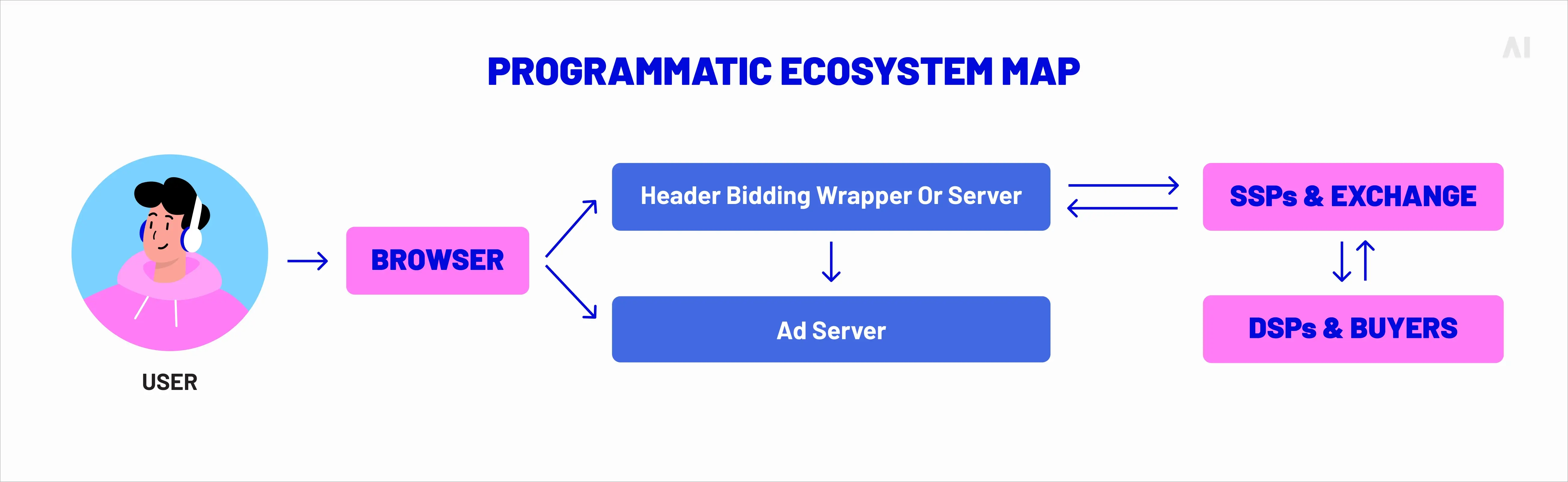
At a medium-knowledge level, you can think of the ecosystem as three layers:
- Demand layer (DSP): where advertisers decide what to buy and what it’s worth
- Market layer (exchanges / deal pipes): where opportunities are matched
- Supply layer (SSP / publisher stack): where publishers offer inventory and enforce their own rules
In practice, there are also identity, brand safety, verification, and measurement services around that core. But if you understand the three layers, most “why did this happen?” questions become answerable.
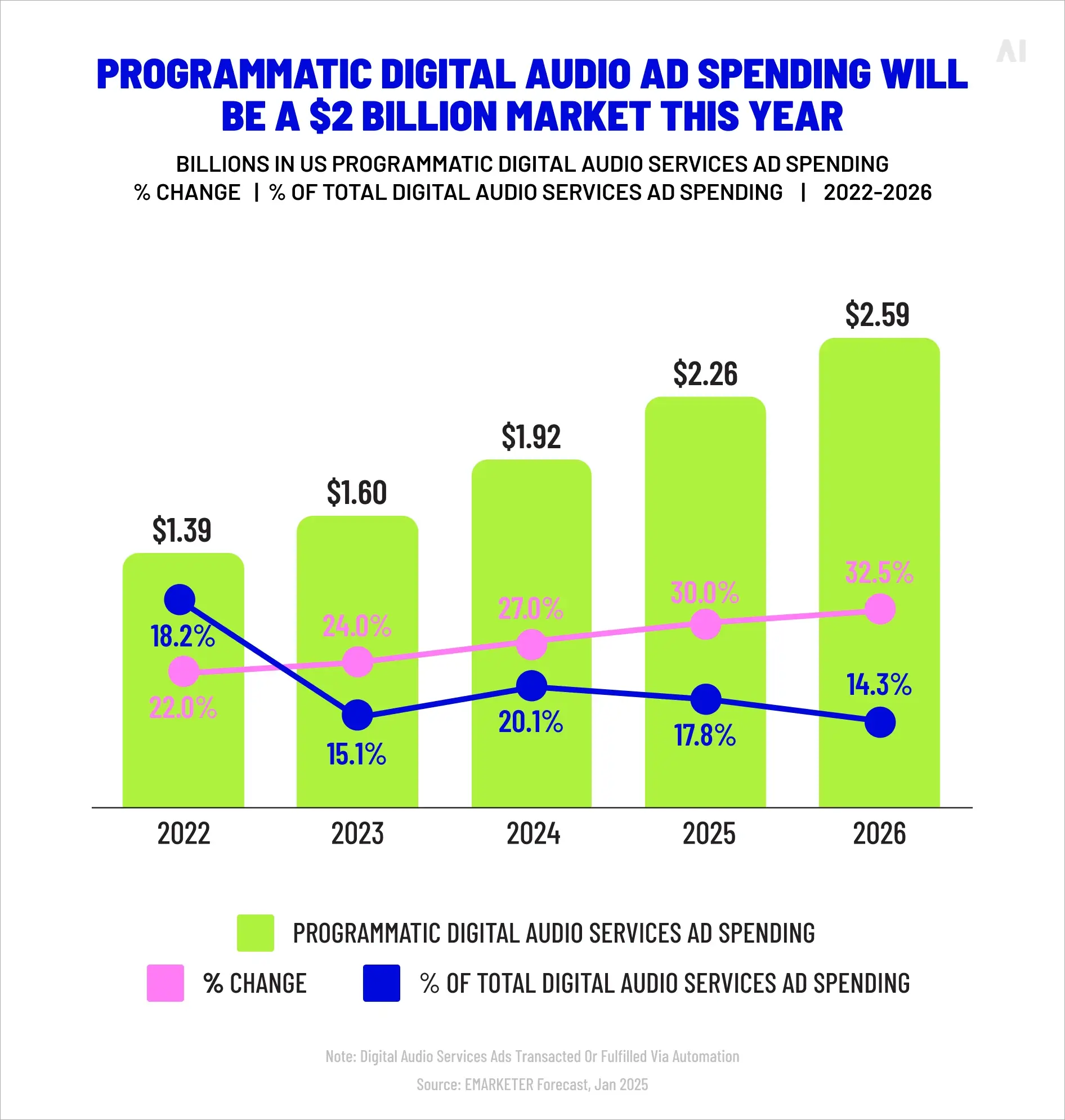
⚡ EMARKETER projects $2 billion in U.S. programmatic digital audio services ad spending in 2025. They also note programmatic will account for 3 in 10 digital audio services ad dollars in 2025, which shows how “DSP thinking” keeps spreading beyond display.
💡 If you want a direct, non-hand-wavy comparison of the three core programmatic components, AI Digital’s DSP vs SSP vs ad exchange explainer is the cleanest reference.
DSP operating models
DSPs come in different operating models, and the right one depends less on “budget size” and more on how much control you need and how much operational capacity you have.
- Self-serve typically gives the most direct control. You set up campaigns, tune targeting, manage pacing, evaluate supply paths, and interpret the reporting yourself. It’s powerful, but it expects competence: you need people who can operate it and governance that prevents “random tweaks” from turning into strategy.
- Managed service shifts day-to-day execution to a provider (agency, trading desk, or platform-managed team). It often improves operational consistency and speeds up launch, but it can reduce visibility into the detailed levers unless transparency is explicitly built into the relationship.
- White-label / embedded models exist too, especially when a company wants to offer programmatic buying as part of a broader product. The trade-off is the same: convenience vs ownership of decisioning and data.
{{26-Ad-Server-vs-DSP-Whats-the-Difference-2="/tables"}}
💡 If you’re modernizing how you run these operating models (including how planning and buying work together), AI Digital’s media planning and buying guide is a helpful bridge between “strategy” and “execution reality.”
Ad server vs DSP: Key differences and overlaps
Before we compare, it’s worth calling out the trap that creates most confusion: both platforms can “serve ads,” both can “target,” and both can “report.” That overlap is real, but it doesn’t mean they’re duplicates.
A useful way to hold the distinction in your head is this:
- Ad servers are designed to control delivery inside an environment.
- DSPs are designed to decide what to buy across many environments.
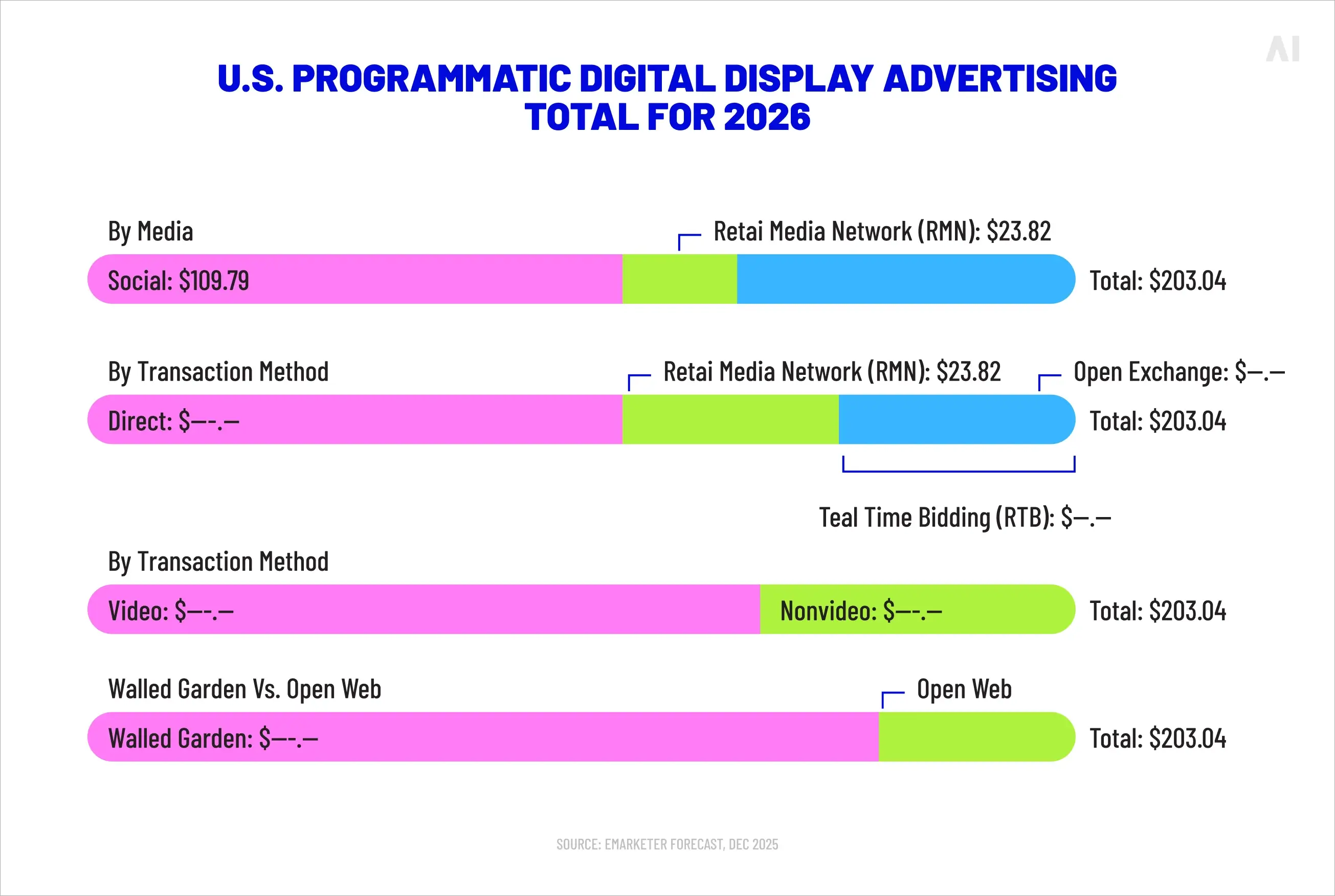
⚡ EMARKETER expects U.S. programmatic ad spending to surpass $200 billion in 2026, with most automated buys transacted via direct deals. That scale is exactly why separating control-layer decisions from market-layer decisions becomes operationally important.
{{26-Ad-Server-vs-DSP-Whats-the-Difference-3="/tables"}}
Core differences
Here are the differences that actually matter in day-to-day operations, not just in a feature checklist.
- What they optimize for: A DSP optimizes for buying outcomes: efficient reach, conversions, viewability, attention, incremental lift—whatever you define as success. An ad server optimizes for delivery outcomes: hitting guaranteed commitments, enforcing priorities, avoiding conflicts, and producing auditable logs.
- Where “truth” lives: In many organizations, the ad server becomes the record of what was delivered within that publisher or owned network context. DSP reporting is also robust, but it’s naturally tied to auctions, bid strategies, and post-bid measurement. If the question is “Did we deliver what we sold?” the ad server usually wins. If the question is “What should we buy next and at what price?” the DSP is built for that.
- The money model behind decisions: DSP decisions are generally price-based and impression-by-impression. Ad server decisions are often priority-based and commitment-based. One is closer to trading. The other is closer to operations.
- Creative governance and sequencing: Both can rotate creatives. But ad servers are often the better tool for strict sequencing (what must run first, what can’t run together, what must avoid competitive adjacency), especially in premium publisher and CTV setups.
- The “default customer”: Ad servers are fundamentally aligned to inventory owners and delivery teams (publishers, broadcasters, ad ops). DSPs are fundamentally aligned to advertisers and buyers (brands, agencies, performance teams).
If you want a fast “at a glance” artifact you can share internally, this table helps, as long as you treat it as typical patterns rather than rigid boundaries.
{{26-Ad-Server-vs-DSP-Whats-the-Difference-4="/tables"}}
Where they overlap
Overlap is not a bug. It’s a byproduct of modern ad tech doing multiple jobs. The overlap becomes confusing when teams assume “same feature name = same outcome.”
Here are the most common overlap zones and what’s really going on:
- Both can target—but targeting means different things. In an ad server, targeting is often about eligibility inside a controlled environment (geo/device/context rules, user-level caps, sponsorship constraints). In a DSP, targeting is often about selecting impressions in a broad marketplace and allocating spend across many supply sources.
⚡ Overlap is usually feature-level, not decision-level. Two tools can both “target,” but one is enforcing eligibility while the other is choosing what to buy.
- Both can measure—but measurement is shaped by where the log originates. An ad server log is usually closer to “what was delivered” within that environment. DSP reporting is broader and includes bid dynamics, win rates, and optimization signals that an ad server doesn’t care about.
- Both can manage creatives—but creative control is not the same as creative intelligence. DSPs often tie creative choice to performance learning. Ad servers often tie creative choice to rules, priorities, and compliance constraints.
Once you separate “control layer” and “buying layer,” the overlap stops being threatening. It becomes a design opportunity: you decide which platform is the source of truth for which decisions.
DSP vs ad server: How to choose strategically
Choosing isn’t about picking a “better” tool. It’s about aligning the tool to how you make money, how you buy, and what you need to control.
A good strategic choice answers three questions:
- What outcome are we trying to guarantee?
- Where do we need control, and where do we want automation?
- Who will operate this reliably every week, not just during launch?
Align with revenue model
Your revenue model is the cleanest decision filter.
- If you own inventory (publisher, broadcaster, app network, CTV service), your core challenge is monetization under constraints: guaranteed commitments, competitive separation, policies, and yield management. That world naturally gravitates toward ad servers because you need deterministic control.
- If you buy inventory (brand or agency), your core challenge is efficient, repeatable outcomes across many supply sources. That world naturally gravitates toward DSPs because they centralize buying, bidding, and optimization at scale.
This is also why many mature organizations end up using both: they have some owned/controlled inventory, some direct deals, and some programmatic buying. One tool rarely covers all those realities cleanly.
{{26-Ad-Server-vs-DSP-Whats-the-Difference-5="/tables"}}
Control vs scale
This is the trade-off that shows up everywhere, even if people don’t name it.
If control is the priority, you care about things like:
- Guaranteed delivery (with makegood logic)
- Sequencing and adjacency rules
- Strict governance of where creative can appear
- Reliable auditing and billing records
Those needs point to ad serving.
If scale is the priority, you care about things like:
- Reach across many publishers and apps
- Efficient frequency and audience coverage
- Continuous optimization (bids, pacing, allocation)
- Rapid testing of creative and targeting variants
Those needs point to DSP buying.
The mistake is treating the trade-off as a moral one. It’s not. Some campaigns need tight governance because the deal requires it. Some campaigns need scale because the goal demands it.
Direct deals vs programmatic buying
Direct deals and programmatic buying can both be “video,” both can be “CTV,” and both can show up in the same reporting deck. But the mechanics are different enough that your tool choice should change.
With direct deals, you’re negotiating a commitment: placement guarantees, share of voice, fixed CPMs, sponsorship packages, and delivery expectations. You need a delivery system that honors those rules.
With programmatic buying, you’re participating in a market: prices and opportunities vary impression-by-impression, and your goal is to win the right opportunities efficiently. You need a decisioning system that can evaluate the market at speed.
⚡ Direct deals reward planning and precision. Programmatic rewards fast feedback loops and disciplined measurement.
Technical maturity and resources
This part is less glamorous, but it’s often the real constraint.
Both ad servers and DSPs can be operated poorly. When that happens, the platform gets blamed, but the root cause is usually operating maturity.
An ad server tends to demand:
- Solid trafficking discipline
- Clear naming conventions and QA
- Governance around priorities, pacing, and reporting
- People who understand delivery logic
A DSP tends to demand:
- Measurement hygiene (conversion definitions, attribution logic, signal quality)
- Ongoing optimization cadence (not “set and forget”)
- Supply path awareness and brand safety controls
- People who can interpret noisy data without panic
If you don’t have the resources for one model today, that doesn’t mean you’ll never adopt it. It means you should choose a setup that matches your ability to run it consistently.
When each platform makes strategic sense
Now let’s get concrete. These are the most common situations where each tool is the right anchor.
When to use an ad server
An ad server makes strategic sense when delivery commitments and governance are the point of the campaign, not just the outcome metric.
You’ll typically want ad serving at the center when you’re dealing with:
- Guaranteed campaigns and sponsorships. If you sold a placement, a share of voice, or a premium package, you need predictable delivery logic and logs you can stand behind.
- CTV pod control and streaming decisioning. In CTV environments, ad serving and “ad decisioning” often handle pod structure, competitive separation, frequency constraints, and waterfall logic between direct and programmatic demand. AI Digital’s connected TV guide touches on how these systems interact in streaming workflows.
- DOOH scheduling and rule-driven delivery. Digital out-of-home often depends on time-of-day rules, venue constraints, brand safety requirements, and guaranteed plays. That’s closer to controlled delivery than open auction logic, even when the buy is automated. AI Digital’s DOOH overview provides a practical explanation of how DOOH works and why governance matters.
- Regulated categories or strict adjacency constraints. When policy rules are complex (creative approvals, content adjacency, competitive separation), ad serving helps enforce those rules deterministically.
- Situations where auditability matters. If you expect billing disputes, makegoods, or strict reporting requirements, the ad server’s log-level orientation becomes valuable.
When to use a DSP
A DSP makes strategic sense when market access, scale, and optimization are the point of the campaign.
You’ll typically want DSP buying at the center when you’re dealing with:
- Rapid reach across fragmented supply. If your audience lives across many apps, sites, and streaming environments, you need centralized buying.
- Performance goals that require continuous learning. Lead gen, ecommerce, app installs, and other performance programs benefit from iterative bid and allocation optimization.
- Cross-channel coordination. DSPs can help coordinate frequency and learning across display, video, in-app, and CTV in a way that isolated direct deals rarely can.
- Testing-heavy creative programs. When you’re running structured creative tests, DSPs often provide the scaffolding to evaluate variants at scale and reallocate budget to winners.
💡 DSPs are also increasingly shaped by automation and machine learning inside the platform. If you want the details of how DSPs apply AI to bidding, targeting, and workflow efficiency (and where that can go wrong), AI Digital’s AI-in-DSPs article is a solid reference.
Here’s a helpful market-level context for why DSP-led video buying has become such a central strategy. IAB reported that U.S. digital video ad spend reached $64B in 2024 and is projected to reach $72B in 2025, and that digital video is expected to capture nearly 60% of total TV/video ad spend in 2025.
Why combining both often wins
Many teams eventually land here because the market forces it.
Combining an ad server and a DSP is often the most practical way to balance governance and performance. Each tool becomes the “best answer” for its own layer:
- The ad server enforces delivery priorities, commitments, and controlled rules.
- The DSP brings scalable demand, pricing intelligence, and optimization across supply.
This is common in publishing and CTV, where the same piece of inventory might be eligible for direct-sold delivery, private marketplace deals, and open auction demand depending on what needs to be fulfilled at that moment.
It also shows up on the advertiser side when brands want consistent governance over creative and frequency in certain environments while still running large-scale programmatic buying elsewhere.
Conclusion: Turn ad tech choices into your competitive advantage
Ad servers and DSPs are often discussed like rival products, but they’re better understood as different layers of control.
If you remember just one framing, make it this: a DSP is built to decide what to buy across the market; an ad server is built to control what gets delivered inside an environment. The overlap is real, but the intent is different, and that intent shapes how the platforms behave when things get messy.
When you choose strategically—based on revenue model, governance needs, and operational capacity—you reduce wasted effort and make reporting more coherent. You also put fewer decisions into “platform default” mode, which is where performance quietly slips.
If you want help mapping your current stack, identifying where your source of truth should live, or designing a setup that matches your channels and goals, AI Digital’s team can help you pressure-test options.