Contextual Advertising: How to Reach High-Intent Buyers Without Personal Data

Contextual advertising is back in the spotlight, and not as a “pre-cookie” throwback. Modern contextual ads use richer signals (topics, semantics, sentiment, and brand suitability) to match a contextual ad to the moment someone is actually reading, watching, or playing. If you’ve been asking what is contextual advertising, the short answer is: it targets content, not people.
That distinction matters in part because the U.S. digital ad market is still expanding at an enormous scale. IAB/PwC estimates 2024 internet ad revenue reached $259B, up 15% year over year. At the same time, the data plumbing that made audience-based targeting so straightforward is under increasing strain, and IAB’s State of Data 2024 highlights how privacy legislation and signal loss are reshaping data strategies—while pushing many teams to expect personalization and targeting to get harder unless they adapt how they operate.
All of that sets up the real question: if audience signals are getting noisier and harder to rely on, what does “good targeting” look like when you start from the content itself, not the identifier. Contextual is one of the clearest answers, but only if you understand what it actually is (and what it isn’t), how platforms classify environments, where contextual performance tends to hold up, and where it can fall apart when the inputs are thin or the suitability rules are too blunt.
In the full piece, we break it down end to end, including what contextual advertising means in practice, how contextual matching works, the benefits and trade-offs to expect, the main types of contextual targeting, and how the approach has evolved as AI has made page and video understanding more granular. If you want a practical view—grounded in how buying and measurement work now—keep reading.
💡 Before we get tactical, two internal primers that frame the ‘why’ behind contextual: Navigating the cookie-less future & 2026 media trends report
What is contextual advertising?
Contextual advertising is a targeting method that places ads based on the environment a person is in—what they are reading, watching, or engaging with—rather than who they are or what their historical behavior suggests.
In practice, contextual targeting answers questions like:
- “What is this content about?”
- “What is the tone or sentiment?”
- “Is this a brand-suitable environment for us?”
- “Does this context signal intent that matches our offer?”
The classic example still holds: a running shoe ad beside an article about marathon training. But modern contextual advertising can operate at several levels of precision:
- Topic level (e.g., “Strength training for beginners”)
- Entity level (brands, products, places, people mentioned in the content)
- Sentiment level (e.g., “positive review” vs “product recall”)
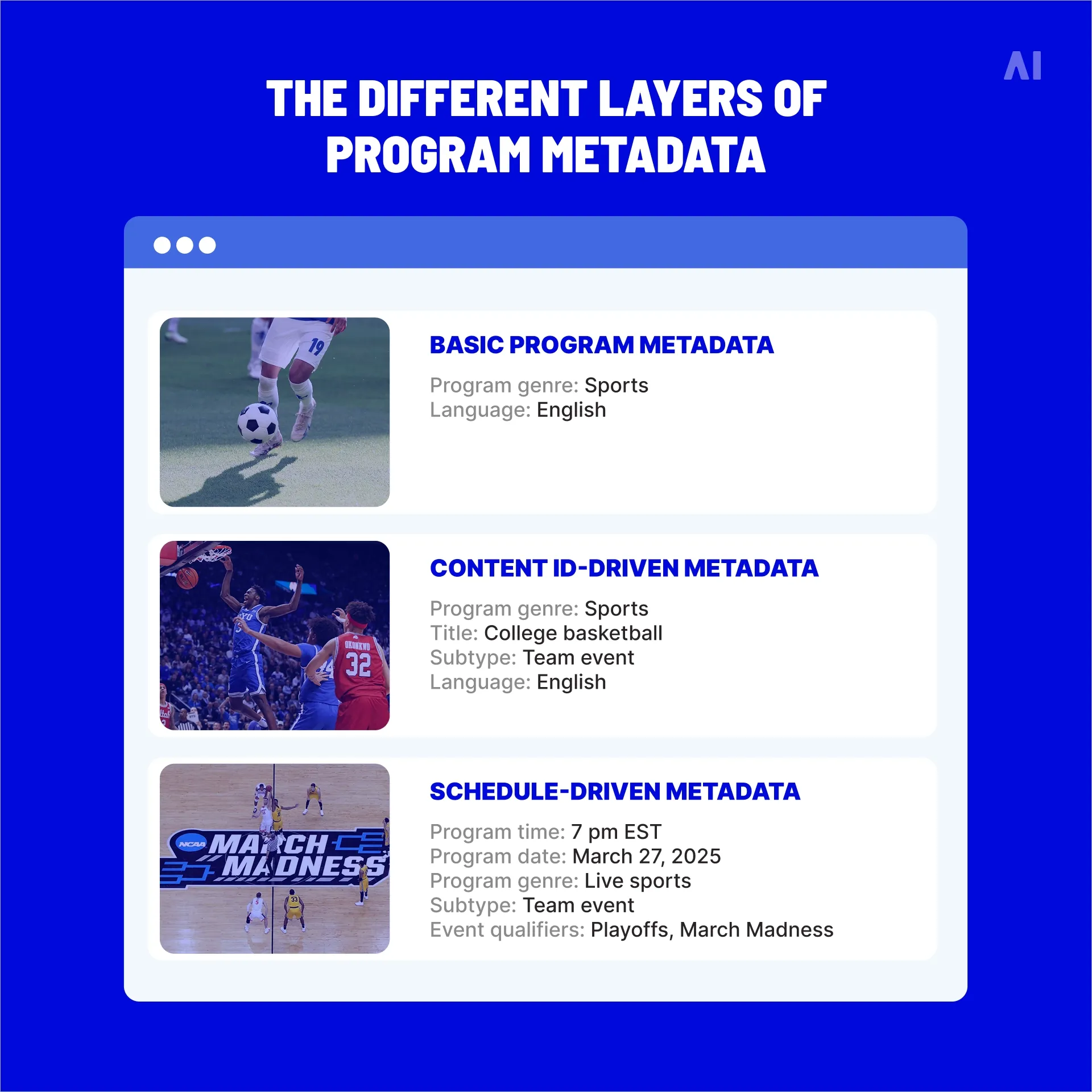
- Program or scene level for streaming video (via metadata, transcripts, or classification)
The common thread: the decision is driven by context signals instead of identity signals.
{{26-contextual-advertising-1="/tables"}}
⚡ Context is how you stay relevant when you don’t have permission—or simply don’t need—to know who the user is.
💡 Related reading: Programmatic contextual targeting
How contextual advertising works
Contextual advertising is usually a pipeline. The specifics vary by vendor, but the workflow tends to look like this:
- Content is analyzed: For web/app inventory that can mean parsing text, headlines, and structure. For video and CTV it often means program metadata, closed captions, or transcripts. For gaming it can mean game genre and in-game “moment” signals (menu vs gameplay vs post-level screens).
- A contextual label is assigned: Many systems map content into a taxonomy (often aligned to IAB categories), then layer in additional dimensions:
- Sentiment (positive/neutral/negative)
- Suitability tiers (brand-specific risk tolerances)
- Custom segments (built around business outcomes like “home renovation planners” or “new parent routines”)
- Context becomes a decisioning input: In programmatic buying, contextual signals can be used as deal criteria, pre-bid filters, or bidder inputs. The bidder then decides whether to bid, how much to bid, and which creative to serve.
- Measurement closes the loop: A contextual strategy becomes repeatable when you can report outcomes by context tier and validate results with lift or holdouts where feasible.
{{26-contextual-advertising-2="/tables"}}
📍 A practical note: contextual systems are only as good as the rules you give them. If your “allow list” is vague and your exclusions are inconsistent, the model will faithfully deliver vague, inconsistent results.
Here’s a quick checklist to pressure-test your setup before you scale spend:
- Can you explain each segment as a buyer moment (not just a broad category)?
- Can you see reporting by topic/sentiment/suitability tier (not just aggregate)?
- Do you have exclusions that protect you from obvious adjacency risks (but aren’t so broad they kill reach)?
- Do you have a creative plan per segment (message matches moment)?
- Do you have a lift plan (at least one method to validate incrementality)?
Key business benefits of contextual advertising
Contextual advertising tends to win when brands need relevance at scale but cannot (or should not) depend on personal data. The benefits below are written in business terms—things you can measure, govern, and explain to stakeholders.
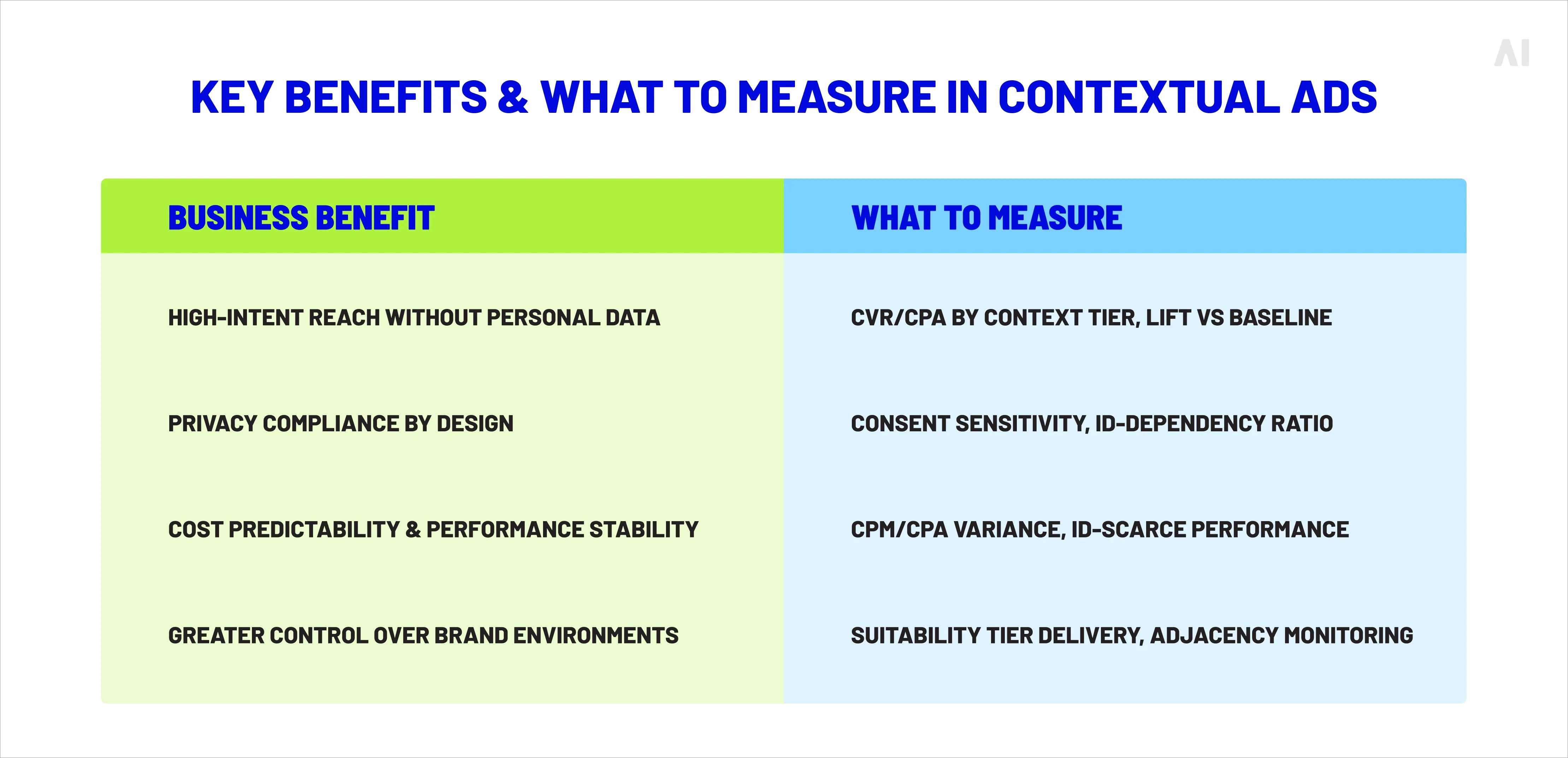
High-intent reach without personal data
Intent is often visible in the content itself. A user reading “best mattress for back pain” or watching a “how to meal prep” video is signaling a near-term need, even if you know nothing about their past browsing.
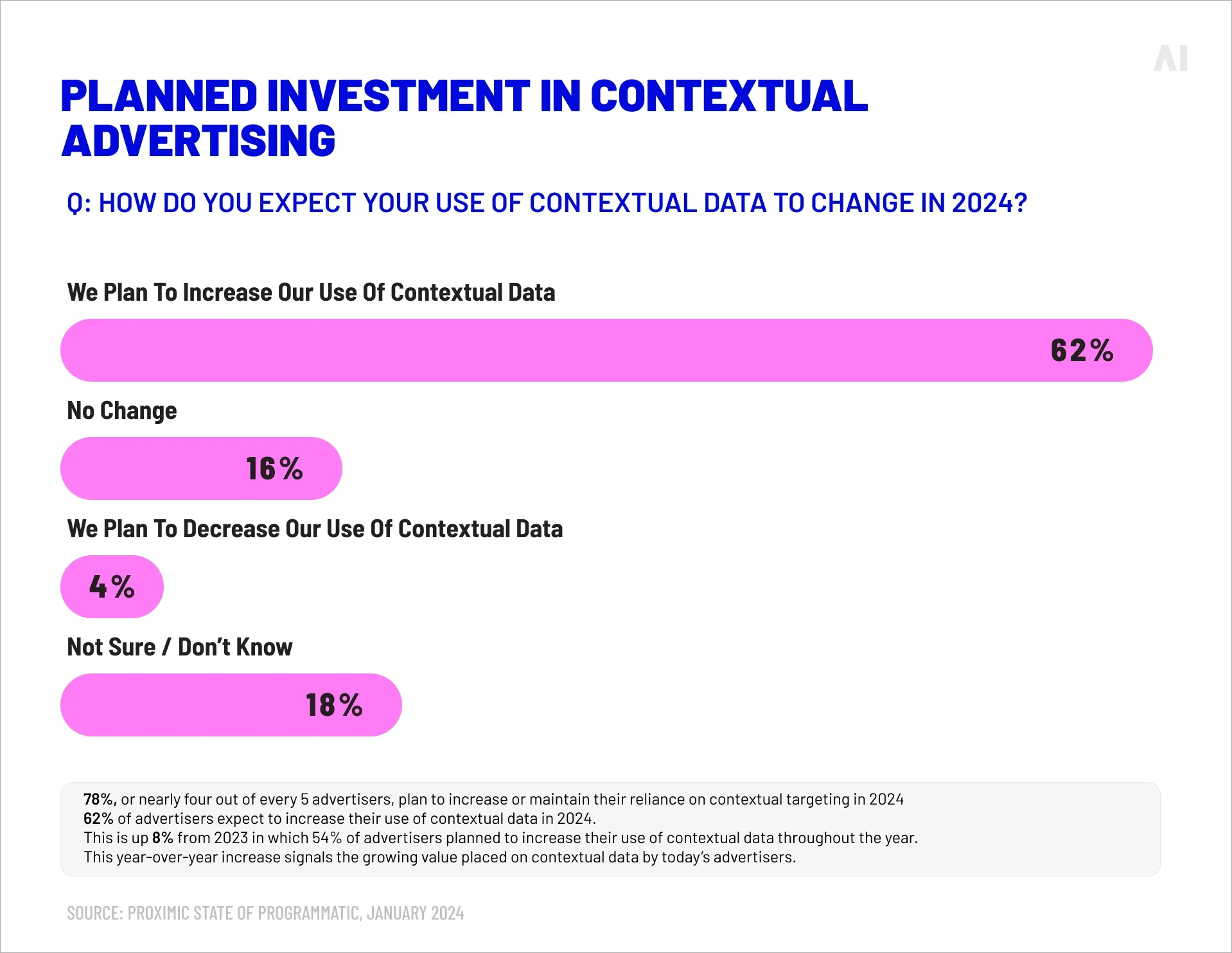
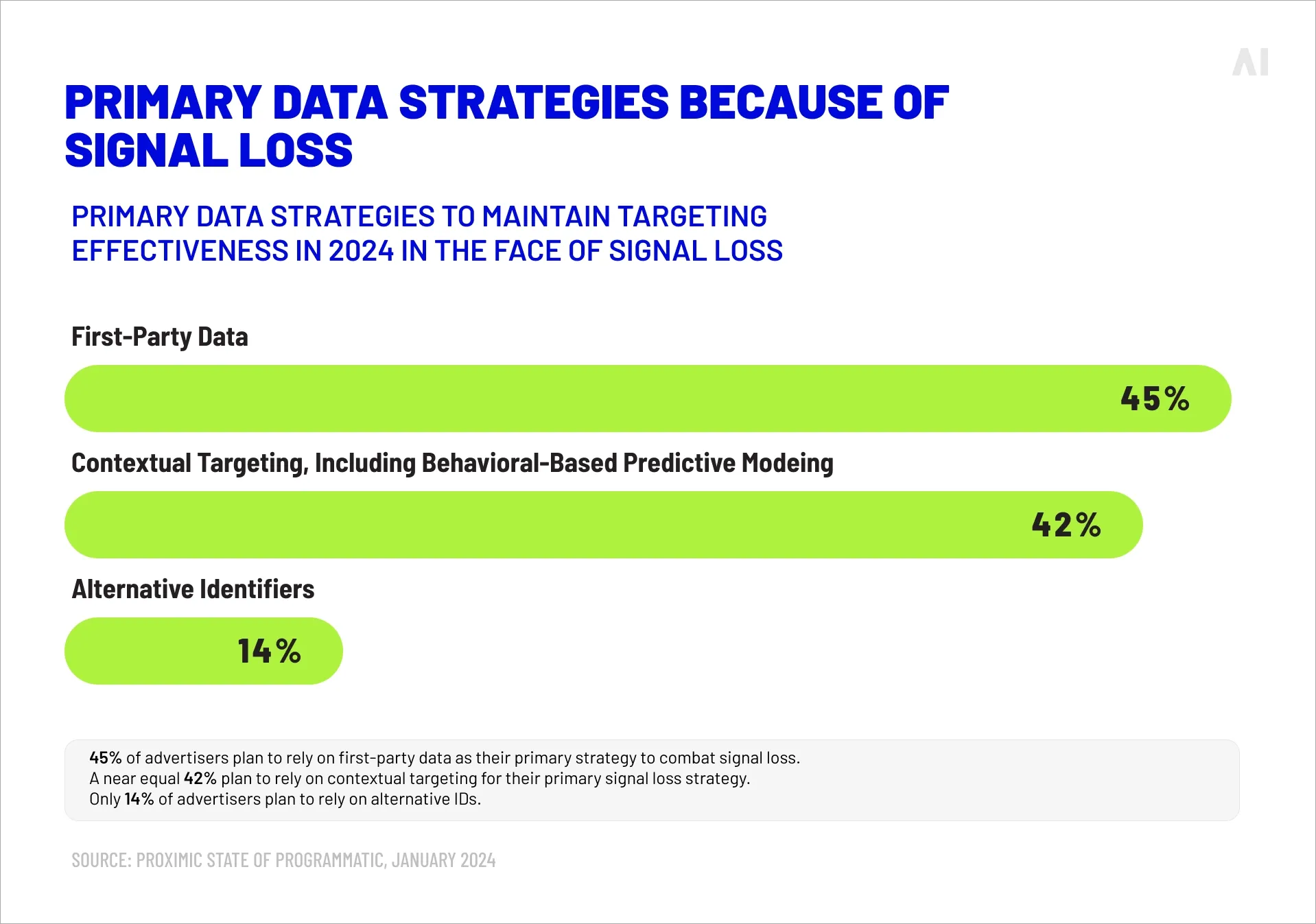
That’s also why contextual has become a core response to signal loss. In Proximic by Comscore’s 2025 State of Programmatic report, 41% of marketers said contextual targeting is their primary strategy for navigating shrinking ID coverage and privacy regulations, and 52% said they plan to increase their use of contextual data in 2025.
How to measure this benefit:
- Reach in high-intent contexts (impressions and unique reach within your chosen categories)
- Conversion rate and CPA by context tier
- Incremental lift versus non-contextual baselines (geo tests, holdouts, or platform lift studies)
📍 A useful rule of thumb: if your contextual segment can’t be described as a buyer moment (“researching,” “comparing,” “solving a problem”), it’s probably too broad.
💡 Related reading: Which targeting option is best for achieving brand awareness
Privacy compliance by design
Contextual targeting does not require a persistent identifier to function. That doesn’t make it “compliance-proof,” but it usually reduces the surface area for risk:
- fewer consent dependencies
- fewer data-sharing obligations
- fewer scenarios where targeting collapses because identifiers disappear
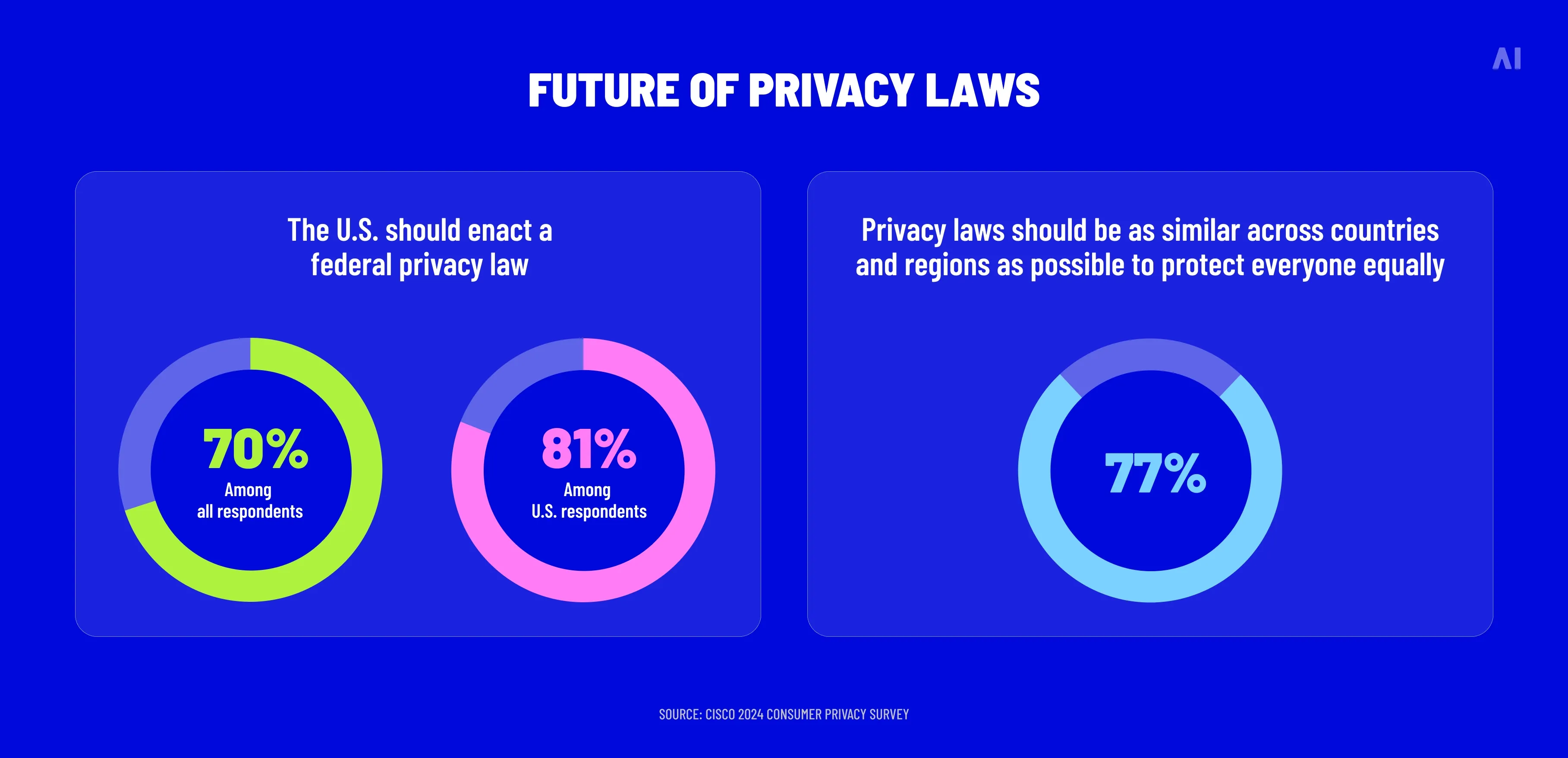
Consumer expectations are moving in the same direction. Cisco’s 2024 Consumer Privacy Survey found 81% of U.S. respondents believe the U.S. should implement a nationwide privacy law. Separately, Deloitte reported that 70% of respondents worry about data privacy and security when using digital services.
How to measure this benefit:
- Consent-rate sensitivity (does performance drop when consent rates fall?)
- Share of spend that is identifier-dependent vs identifier-light
Operational load (time spent on consent troubleshooting, audits, and policy review)
💡 Related reading: Data clean rooms.
Cost predictability and performance stability
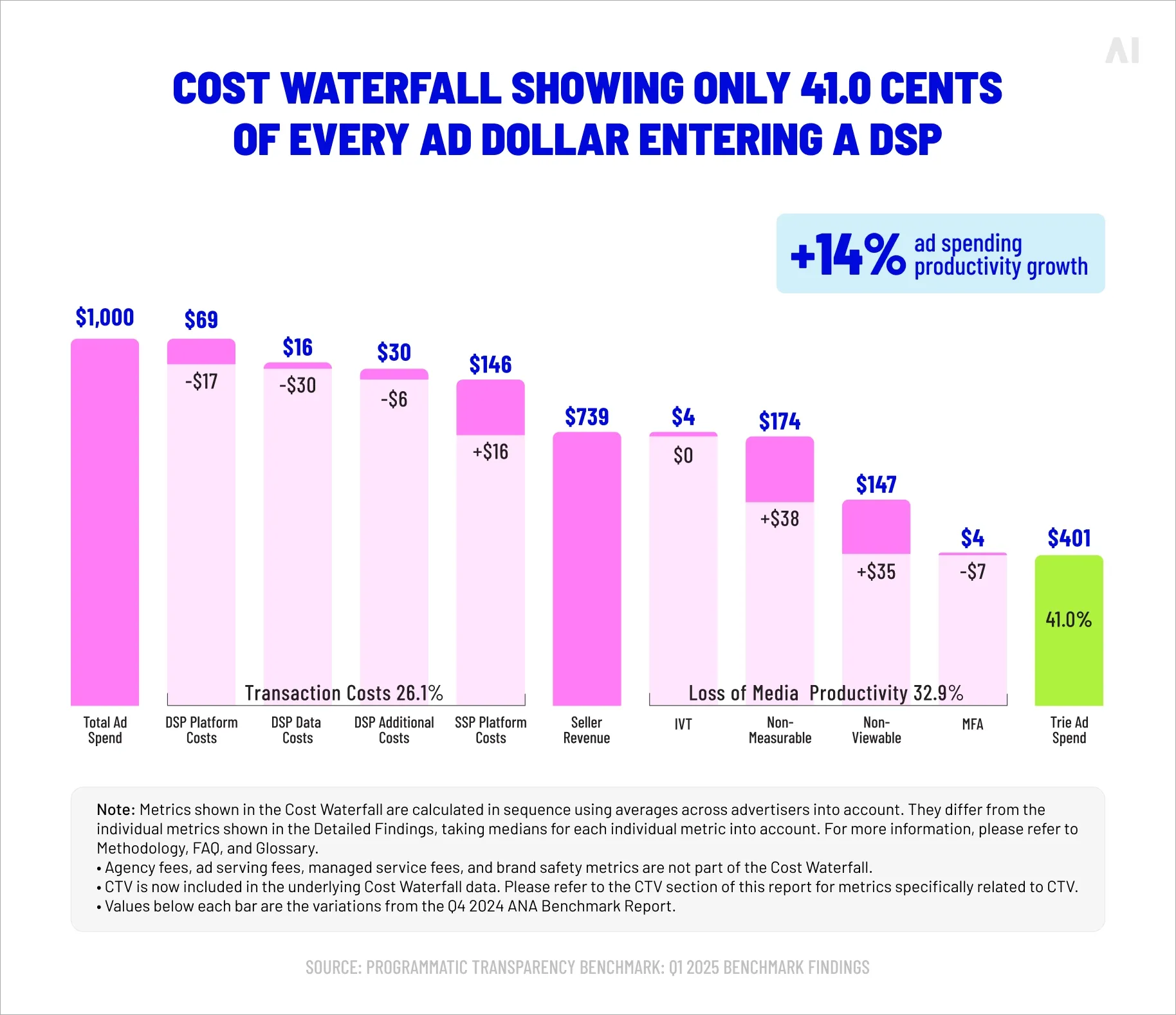
Audience-based buying often has two volatility drivers: data availability (match rates, consent rates, policy changes) and data costs (segment fees, identity vendor “tax,” and intermediary markups).
Contextual doesn’t remove volatility, but it usually provides a steadier baseline because the signal is tied to inventory rather than the user graph.
Proximic by Comscore’s findings suggest privacy laws are directly pressuring audience targeting: 61% of respondents expect audience targeting to be most impacted, while 60% are adjusting targeting strategies and 59% are re-evaluating datasets for compliance.
How to measure this benefit:
- CPM and CPA variance over time (stability matters as much as averages)
- Performance sensitivity to ID loss (compare ID-present vs ID-scarce inventory)
- Marginal cost of incremental reach within your context segments
Greater control over brand environments
Contextual is also a governance tool. When you define the contexts you want, you’re defining:
- where your brand is comfortable appearing
- where you want to avoid adjacency
- what kinds of content support your positioning
This becomes more important as brands move into formats with less obvious page-level context (CTV, short-form video, gaming), where classification and suitability controls often determine whether a buy is acceptable.
A practical recommendation: treat brand suitability as a tiering exercise, not a binary “safe/unsafe” switch. Many brands can run in “hard news” but avoid crisis coverage; they can run in health content but avoid severe illness narratives; they can run in finance content but avoid “scam” framing. Contextual gives you the knobs to do that, as long as you define them.
⚡ If your contextual settings are just ‘blocklists,’ you’re leaving brand control—and performance—on the table.
💡 For a broader view of the control problem in programmatic, see: Safety in programmatic advertising: Why supply protection is essential
Where contextual advertising works best
Contextual works almost anywhere, but it performs best when the context carries genuine meaning—either because it signals intent, or because it shapes perception.
{{26-contextual-advertising-3="/tables"}}
Mid-to-upper funnel and high-consideration purchases
Contextual targeting is strong for categories where people research before they buy:
- Financial services (retirement, credit, investing education)
- Home and furniture (guides, reviews, renovation content)
- Health and wellness (fitness, nutrition, routine-building)
- B2B software and services (problem/solution content, comparisons)
These journeys are rarely one-click. The job is to appear when the buyer is in a mindset that makes your message credible.
Practical tip: build segments around the decision journey (learn → compare → choose). Then map creative to each stage:
- learn: explain the problem, teach basics, remove friction
- compare: highlight differentiators and proof points
- choose: reduce risk (trial, guarantees, support)
Content-rich categories
Contextual targeting thrives in ecosystems with lots of content to classify:
- premium publishers and editorial
- long-form video and creator ecosystems
- review sites and communities (with careful suitability controls)
These environments give contextual models more signal to work with. They also give advertisers more options for brand-building, because the surroundings can do part of the persuasion for you.
Streaming and publisher environments where user IDs are limited
Connected TV is a good example because targeting often relies on a mix of limited identifiers, household-level signals, and publisher data. Contextual cues become a practical alternative for relevance.
IAB’s 2025 Digital Video Ad Spend & Strategy Report found U.S. digital video ad spend grew to $64B in 2024 and was projected to reach $72B in 2025. Within that, CTV rose from $20.3B in 2023 to $23.6B in 2024, and was projected to hit $26.6B in 2025. When budgets move into streaming, contextual targeting helps answer a simple question: “How do we stay relevant even when user-level identity is partial?”
.webp)
Main types of contextual advertising
Contextual advertising isn’t one format; it’s a targeting layer that can be applied across formats. Below are the main types, what they’re good for, and where teams typically go wrong.
{{26-contextual-advertising-4="/tables"}}
Search-based contextual ads
Search is contextual by nature: the user tells you what they want, right now. This includes paid search, shopping ads, and retail media search placements.
A useful structure for search contextual:
- group keywords by intent (informational vs transactional)
- align landing pages and creative to match
- use negative keywords and exclusions to protect budget
📍 Common mistake: treating all queries as equally “ready to buy.” In reality, search intent is a spectrum, and your measurement should reflect that.
Display contextual ads
Display contextual targeting places ads based on webpage or app topics and suitability signals. It’s a practical foundation for cookieless reach because it can work across the open web without requiring user IDs.
💡 Companion refresher: Digital display advertising
📍 Common mistake: using broad categories only (“Sports,” “News”) and assuming the context is tight enough. Broad categories are a starting point, not a strategy.
To tighten display contextual, add at least two more layers:
- subtopics (e.g., “running training plans,” not “sports”)
- sentiment and suitability tiers
- curated domains/publishers for your highest-value segments
Native contextual advertising
Native pairs well with contextual targeting because the unit is designed to fit the surrounding environment. When topic and format align, native can feel more like a useful suggestion than an interruption.
💡 Format overview: Native advertising: a complete guide for marketers in 2026 | 10 Reasons Why Native Advertising Has Become the Smartest Investment in 2026
📍 Common mistake: optimizing for “blending in” while neglecting disclosure and message clarity. Contextual native works when the reader understands what they’re seeing and why it’s relevant.
Video & CTV contextual advertising
Video contextual targeting uses metadata (genre, program, channel, sometimes transcript signals) to align ads with what viewers are watching. The practical goal is “moment relevance” at scale—especially when audience signals are incomplete.
💡 Helpful reads: Native video advertising & Connected TV advertising
📍 Common mistake: assuming genre-level context is enough. For many brands, suitability depends on the specifics of the content, not the label. If you buy “news,” you need a rule set that distinguishes business coverage from crisis coverage.
In-app and in-game contextual ads
In-app contextual targeting can use app category, in-app screen context, and content signals like article text or video metadata. In gaming, contextual can include game genre, environment, and the moment of play.
IAB’s 2024 research suggests advertisers are increasingly comfortable investing in gaming as a brand-suitable channel.
📍 Common mistake: assuming “mobile app” is a context. It’s not. App category is only the first layer; what happens inside the app matters.
💡 Related reading: Programmatic mobile advertising explained
Contextual vs audience-based targeting
Contextual and audience-based targeting are not enemies. Most sophisticated advertisers use both. The difference is which signal drives the decision.
{{26-contextual-advertising-5="/tables"}}
⚡ Measurement is the next battleground. 80% of marketers say deduplicated reach and frequency is critical in programmatic environments—without it, cross-channel optimization becomes guesswork.
A quick decision tree can help teams avoid overcomplicating:
- If the job is retention or upsell, start with first-party audiences and apply contextual as a quality filter.
- If the job is new customer growth, start with contextual segments and use first-party to exclude converters and existing customers.
- If you’re buying in CTV or other ID-limited environments, treat context as the primary signal and optimize around lift and reach, not one-to-one attribution.
AI and the evolution of contextual advertising
The biggest change in contextual advertising is that it has become more precise. Keyword matching is being replaced by models that can interpret meaning, sentiment, and suitability at scale.
This shift is happening alongside broader AI adoption. McKinsey’s 2024 survey reported 65% of respondents said their organizations were regularly using generative AI.
⚡ GenAI is also changing the creative side of contextual execution. IAB reports 86% of digital video buyers are using or planning to use GenAI to build video ad creative, and buyers expect GenAI-made creative to reach 40% of all ads by 2026
For contextual advertising, AI is showing up in four practical ways:
- Better understanding of content (fewer false positives from keyword traps)
- Faster reclassification (useful for fast-changing news and live content)
- Creative matching (mapping messages to contexts and intents)
- Optimization across fragmented supply (ranking and buying the best contexts efficiently)
In Proximic by Comscore’s 2024 State of Programmatic report, 76% of respondents said AI is expected to change how DSPs and SSPs operate, and 52% said AI use was an important factor in selecting a DSP.
There’s also a trust layer. Cisco reported that 59% of consumers said strong privacy laws make them more comfortable sharing information in AI applications.
Related reading: Advertising intelligence: turning data into smarter media decisions
Conclusion
Contextual advertising is no longer a workaround for cookie loss. When it’s done well, it’s a repeatable way to reach high-intent buyers in the moments that matter without leaning on personal data to do the heavy lifting. The brands getting the most from contextual aren’t just buying “relevant pages.” They’re building a system: clear context definitions, brand suitability rules, creative mapped to intent, and measurement that shows what’s genuinely driving outcomes.
If you want to scale contextual across display, native, video, and CTV, execution is where most teams feel the friction. You need a planning and measurement layer that can see performance across channels, and you need supply paths that give you control over where your ads run and what you’re paying for.
That’s where AI Digital can help. Elevate brings campaign planning, cross-platform insights, and optimization into one intelligence layer. Smart Supply media buying tool supports high-quality inventory selection and supply path optimization, so you can make contextual buying more transparent and more efficient.
💡 Learn more about Smart Supply and how it fits into AI Digital’s broader approach here: AI Digital’s ecosystem: From managed services to Smart Supply
If you’re exploring contextual now—or you’re already running it and want to tighten performance, brand suitability, and reporting—get in touch. We’ll walk through your goals, map the contexts that matter for your category, and outline a practical test plan you can take live without rebuilding your entire stack.