Cultivating resilience: agricultural marketing in the age of volatility
That logic looks a lot less dependable in 2026.
Recent disruption across fertilizer production and shipping has pushed a structural weakness into the open. The effective closure of the Strait of Hormuz has hit a route that handles about one-third of global seaborne fertilizer trade, while China has tightened fertilizer export restrictions at the same time. Reuters has reported international urea prices up about 40% from pre-war levels, with U.S. prices also climbing sharply as supply tightens ahead of planting.
The implications reach well beyond procurement. It changes farmer economics, crop planning, purchase timing, and the way agricultural brands should think about media. When the real decision window is dictated by input availability and margin pressure rather than the old seasonal calendar, rigid campaign planning stops looking efficient and starts looking late.
The fixed calendar is no longer reliable
Agricultural marketers have always planned around seasonal patterns, but volatility is now reshaping those patterns in real time. The current fertilizer shock is landing just as planting decisions are being finalized, and that creates a moving target by crop, by region, and by producer economics.
👉 For instance, in Illinois' budget analysis for 2026, projected corn returns trail soybeans by roughly $55 to $80 per acre, pointing to possible acreage shifts. That is a reminder that demand is not disappearing but redistributing.
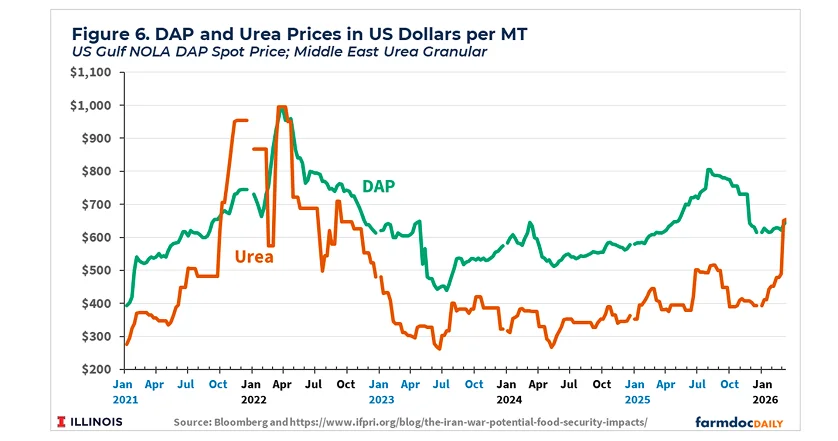
This is where many media plans fall behind reality. A plan built months earlier may still be technically “on schedule” while being strategically out of step with the market. If supply is delayed, if fertilizer is harder to source, or if growers begin changing crop mix, messaging and geography may need to shift with it. A brand that can move dollars, timing, and emphasis quickly has a better chance of staying relevant to the actual purchase decision rather than the one it expected to happen.
Margin pressure changes the message
Volatility influences the buying decision at every level—not only when farmers purchase but how they weigh what's worth purchasing.
👉 USDA’s latest farm income forecast says overall farm cash receipts are expected to decline by $14.2 billion, or 2.7%, in 2026. At the same time, farmers are still dealing with elevated production costs and fresh uncertainty around critical inputs. In practical terms, that means more scrutiny, tighter comparisons, and less patience for broad feature-led messaging.
The farmer mindset in conditions like this is not hard to understand. Per-acre impact takes over—what does this protect, what does it save, what does it improve? Messaging needs to match that focus, working harder on yield efficiency, input optimization, operating resilience, and financial payback. Attention goes to the brands that make the economics visible and concrete.

That does not mean agricultural marketing should become cold or purely transactional. Agriculture is still a trust-based category with long buying cycles and high relationship value. But trust alone is not enough when margins are under strain. Brands need to show that they understand the pressure on the farm business itself. When they do, their message lands differently.
{{26-Cultivating-Resilience-Agricultural-Marketing-in-the-Age-of-Volatility-1="/tables"}}
Visibility matters more when the market feels shaky
The instinct in a volatile market is often to pull back. That reaction is understandable, but it can be strategically expensive.
👉 McKinsey has argued that disciplined spend management can free up as much as 20% of marketing budget and support rapid redeployment toward higher-value activity. Separate long-term evidence summarized by the IPA shows that brands maintaining or increasing advertising investment during downturns tend to grow profits and market share faster in recovery than brands that retreat. The lesson is not “spend blindly.” It is “protect visibility while getting stricter about waste.”
In agriculture, that distinction carries particular weight. This is not a category where trust can be switched off for a quarter and switched back on when conditions improve. If anything, periods of uncertainty are when consistent presence becomes more valuable. Farmers are under pressure, but they are still evaluating options, still comparing suppliers, and still looking for signals of reliability. Going quiet at that moment hands space to competitors that stay visible and useful.
{{26-Cultivating-Resilience-Agricultural-Marketing-in-the-Age-of-Volatility-2="/tables"}}
Fragmentation is expensive when the ground keeps moving
There is another problem volatility exposes: fragmentation inside the media plan itself.
👉 Farm audiences do not live in one channel. USDA data shows that 85% of farms had internet access in 2025, 50% used the internet to purchase agricultural inputs, and 29% used it to market agricultural activities. Farm Journal has also reported strong use of streaming and social media among producers. The audience is reachable, but not through a single neat path.
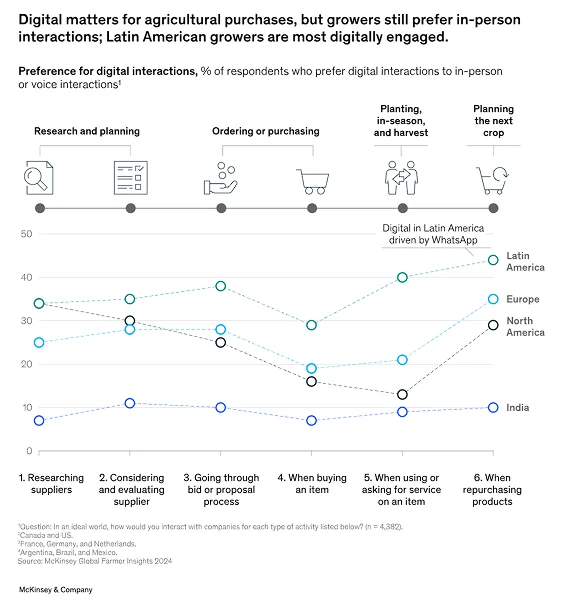
That makes fragmented execution harder to justify. When brands are spread across niche publishers, direct platform buys, siloed reporting, and disconnected vendors, they pay for it twice: once in operational drag and again in slower decision-making. In stable conditions, that inefficiency is frustrating. In volatile conditions, it becomes a tax.
This is where a more joined-up, adaptable approach becomes valuable. AI Digital’s Open Garden framework is not simply a media philosophy. In a market like this, it becomes a practical operating advantage. Transparency, cross-channel visibility, and the freedom to optimize without being trapped inside a single buying silo make it easier to respond when regional conditions shift, crop economics move, or messaging needs to change quickly. The goal is reducing friction when speed matters most, not adding complexity for its own sake.
Resilience is now a marketing discipline
Look past the supply-chain headline and the 2026 fertilizer shock reveals something larger: a stress test for how agricultural marketing is planned.
A fixed-calendar approach assumes the market will behave predictably enough for timing to do most of the work. That assumption is weaker now. Resilient agricultural marketing needs to be more adaptive in timing, sharper in economic messaging, steadier in visibility, and less burdened by fragmentation. It has to function more like a live operating system than a pre-set campaign calendar.
Brands that make that shift will be in a stronger position not only for this season, but for the next period of disruption too. Because volatility may not be the exception anymore. It may be the condition.
If this is where your team’s thinking is heading, we would be glad to talk through what a more agile, transparent media approach could look like in practice.