The Human Harvest: Why High-Touch Is the New High-Tech in Ag-Marketing

There is a particular tone American farmers have been using this winter, and marketers ought to be listening to it. When Farm Journal's economists asked producers what success would look like in 2026, the answers came back terse and almost defiant. Zero capital spending where possible. Nothing bought that wasn't necessary. The full picture, set out in AgWeb's Crisis of Confidence dispatch, is of a sector deciding to subtract its way out of trouble—a decision made under the weight of net farm income running roughly $48 billion below its 2022 peak.
What is striking is how poorly ag-marketing has matched the mood. While producers have been stripping their operations to essentials, the agencies and brands serving them have been doing the opposite—accumulating channels, automation layers, AI assistants, dashboards, retainers. There is something structurally off about it—a growth industry feeding on a contracting one. The producer has spent the past eighteen months demonstrating, in real time, what disciplined decision-making under pressure looks like. Most marketing organizations have yet to take the lesson.
The productivity mirage
For much of the past decade the MarTech industry has operated on a single, unexamined assumption—that more would mean better. More tools, more channels, more automation, more touchpoints. The Content Marketing Institute's most recent B2B benchmarks suggest the assumption is failing in the field. Most teams now describe their content efforts as merely moderate, and only a small minority report genuine effectiveness. The bottleneck has migrated from execution to attention; teams spend so much time managing their machinery that the work itself has nowhere to go.
The teams escaping this trap are making a deliberate choice—they are getting smaller, on purpose. Wynter's working-tactics 2025 research profiled a B2B team that generated thirty million impressions on a half-million-dollar budget by walking away from underperforming channels and concentrating on the few that paid. Their advantage was temperamental—a willingness to leave reach on the table in pursuit of conviction.
Translated into agricultural terms, the lesson is straightforward. A campaign that turns up in two trusted places carrying a real argument will reliably outwork one that turns up in twelve generic ones with nothing to say. Strategic patience, properly understood, is not a slower version of marketing but a more selective one.
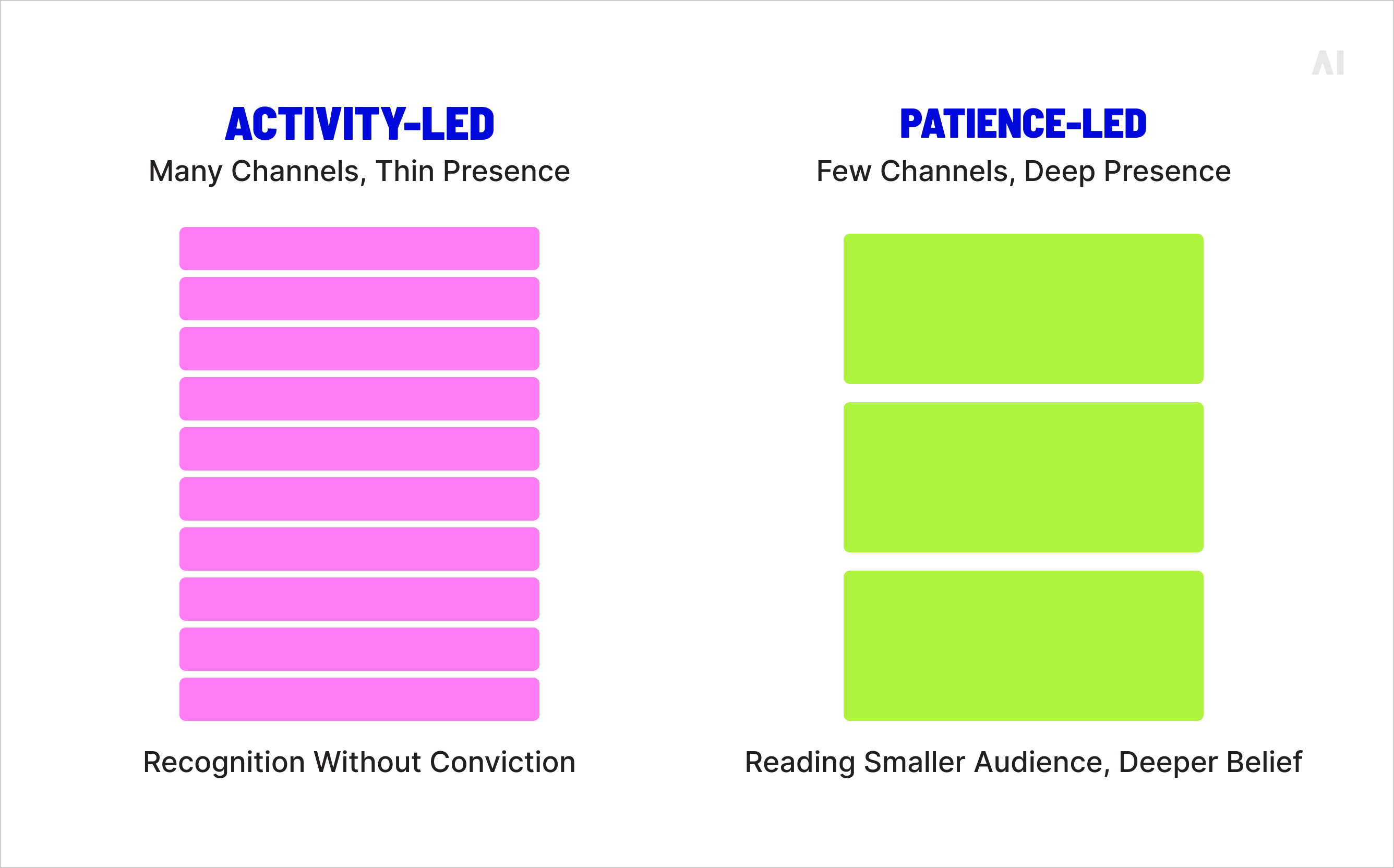
{{26-Human-Harvest-High-Touch-Ag-Marketing-1="/tables"}}
The quality tax
There is now a word for what happens when an industry chases volume past the point of usefulness. Slop, named Merriam-Webster's 2025 Word of the Year, has become the shorthand for the AI-generated, mass-produced material now flooding the open web. It is not a purely aesthetic complaint. Raptive's research published last summer found consumers were measurably less likely—by some 14%—to consider buying products advertised alongside content they suspected was machine-made. The consequences are not abstract. They are concrete, and they show up where they hurt most: in the pipeline.
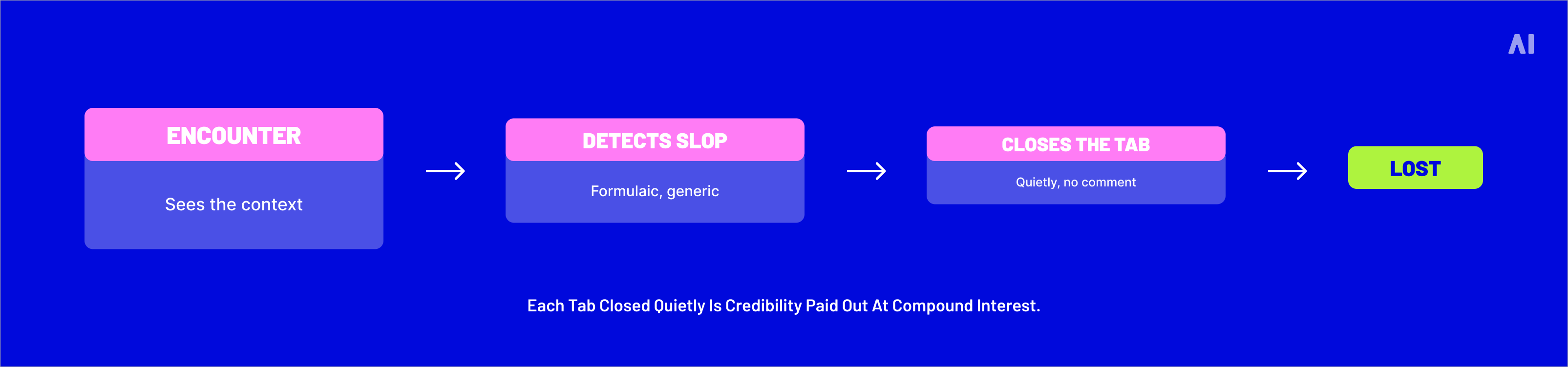
In agriculture, the penalty hits harder than almost anywhere else. Producers are by reputation and by research some of the most private buyers in any category, depending on a small and carefully curated set of trusted sources. They do not write angry comments under bad content. They simply close the tab and they do not come back. A column of formulaic copy, an AI-illustrated banner, a sponsored post that reads as though no one quite remembered who it was for—each of these is its own small forfeit of credibility, paid out at compound interest.
The only campaign worth running in 2026 is one a fifth-generation row-cropper would willingly read twice. Speed, cost, and scale are how you get there—they aren't what you're aiming for.
Trust travels through people
The single most telling number in B2B research this year is buried in Noble & Wynter's 2025 State of Social Proof: 63% of B2B executives now begin vendor research by asking their network rather than searching online. The implication is unflattering for marketers and unsurprising to anyone who has spent time in farm country. The most consequential conversations about what to buy are happening in places marketing cannot directly reach—in private group chats, in dealer texts, at kitchen tables.
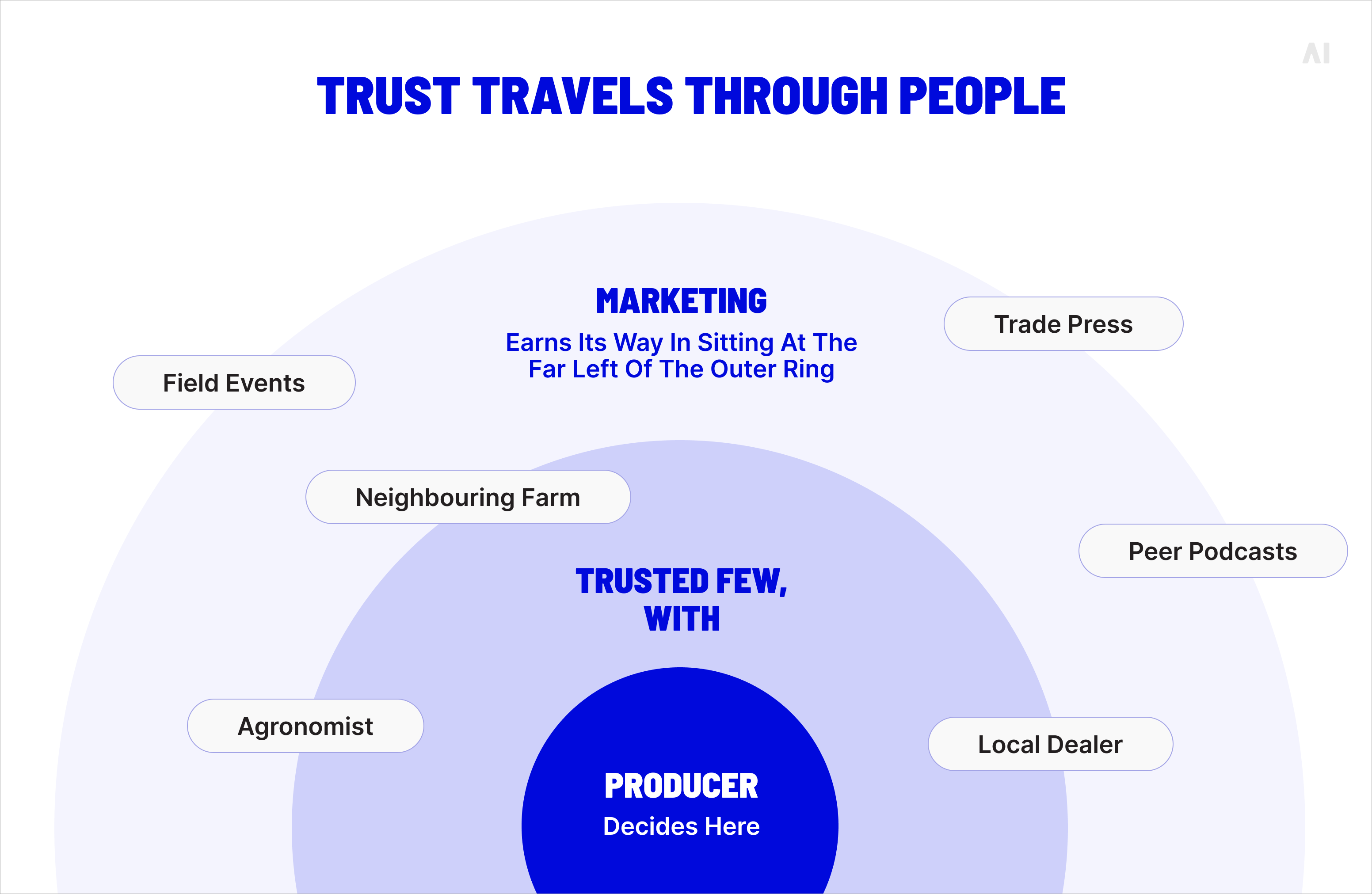
Agriculture has lived with this reality for generations.
- McKinsey's grower research finds that somewhere between half and two-thirds of US farmers rank agronomists and peer farmers as their most valuable sources of product information.
- At last year's Precision Farming Dealer Summit the producers Mike Starkey and Loran Steinlage made the case in the most unsentimental terms available—dealers earn trust through responsive service, hands-on demonstration, and ongoing training, and long-term relationships outlast quick sales.
- Bushel's most recent State of the Farm survey shows the pattern holding even as the sector digitizes.
The tools are new. The trust still moves through the same channels—the local retailer, the agronomist, the neighbouring farm.
What this calls for, from marketers, is something closer to curation than to broadcasting. The work of 2026 is identifying the rooms where producers already trust each other, and earning a seat in them, not staging louder versions of conversations that ought to be happening over coffee.
{{26-Human-Harvest-High-Touch-Ag-Marketing-2="/tables"}}
Championship habits, producer standards
There is a useful yardstick available to marketing teams this year, and they have not had to invent it. When a farmer defers a six-figure equipment upgrade because the return doesn't pencil out, that decision sets the standard for what counts as discipline. Marketing dollars now answer to the same logic the customer is already applying to their own input bill. A campaign that cannot survive that scrutiny is not really a campaign; it is overhead in nicer packaging.
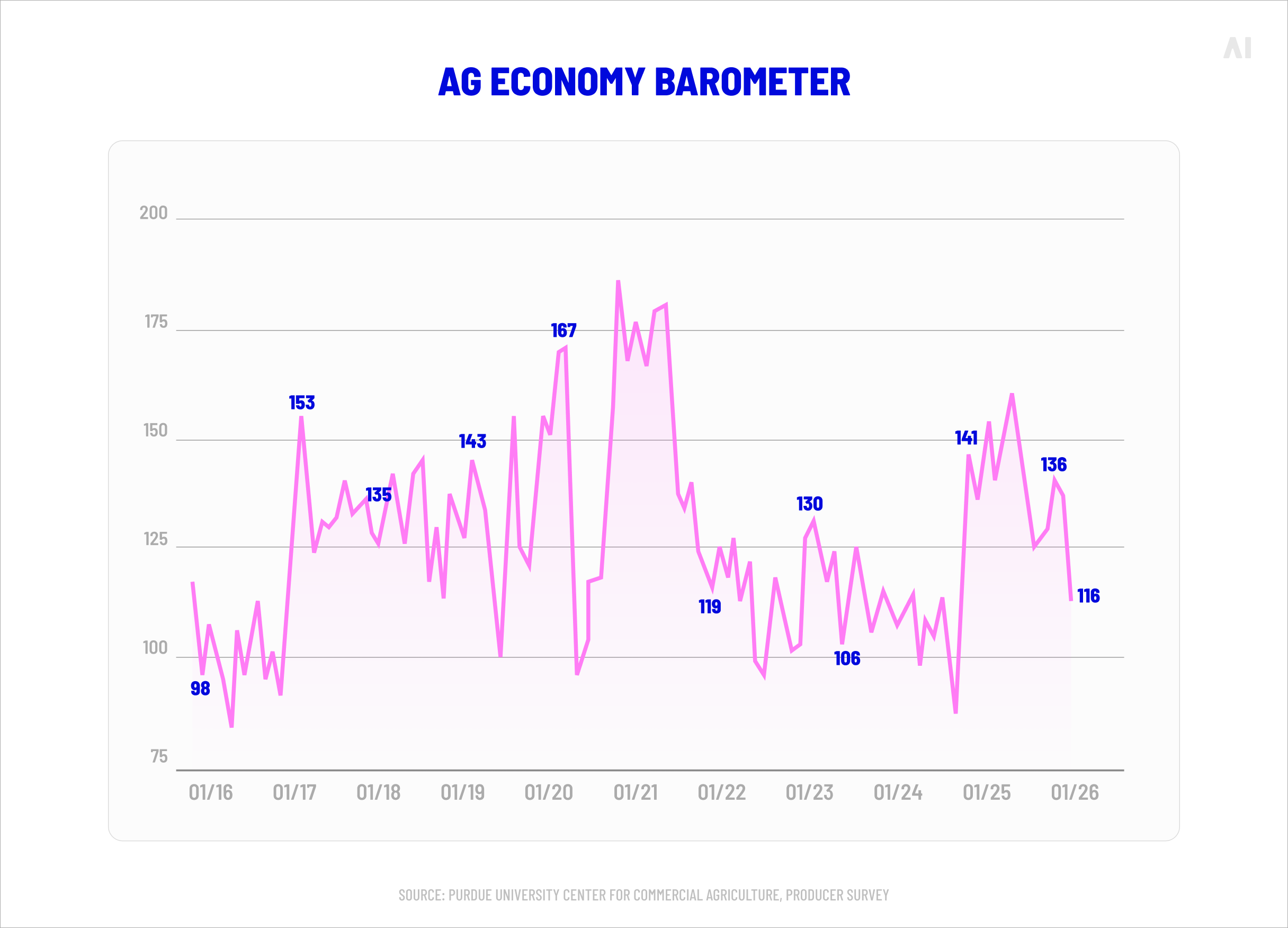
What gets called a championship mindset in marketing decks tends to be a fairly soft idea. In 2026 it ought to harden. The discipline worth practising is narrower and harder: skip a trend, mute a channel, decline a tool, kill a campaign that has not earned its keep over three quarters. Activity has never been quite the same as achievement. In tight years the gap between them turns brutal.
The closing argument
The advantage in 2026 will belong to ag-marketing teams willing to do fewer things, with more conviction, for the people who already trust them. There is nothing conservative about this position. It is, very precisely, the posture producers themselves have already adopted, and it is the only posture worth taking into a year their customers are spending in retreat.
At AI Digital, this is the kind of marketing our Open Garden framework was built to support—transparent, DSP-agnostic media buying that gives teams the visibility to know what is working and the discipline to remove what is not. If you are auditing your 2026 approach against the standard your customers are setting for themselves, we would welcome the conversation.